Can You Trade Memecoins Without KYC?
On-chain, yes. Through most of the doors people actually use, it depends. Here’s where the line is and what it costs you on either side.

Merlin
Author
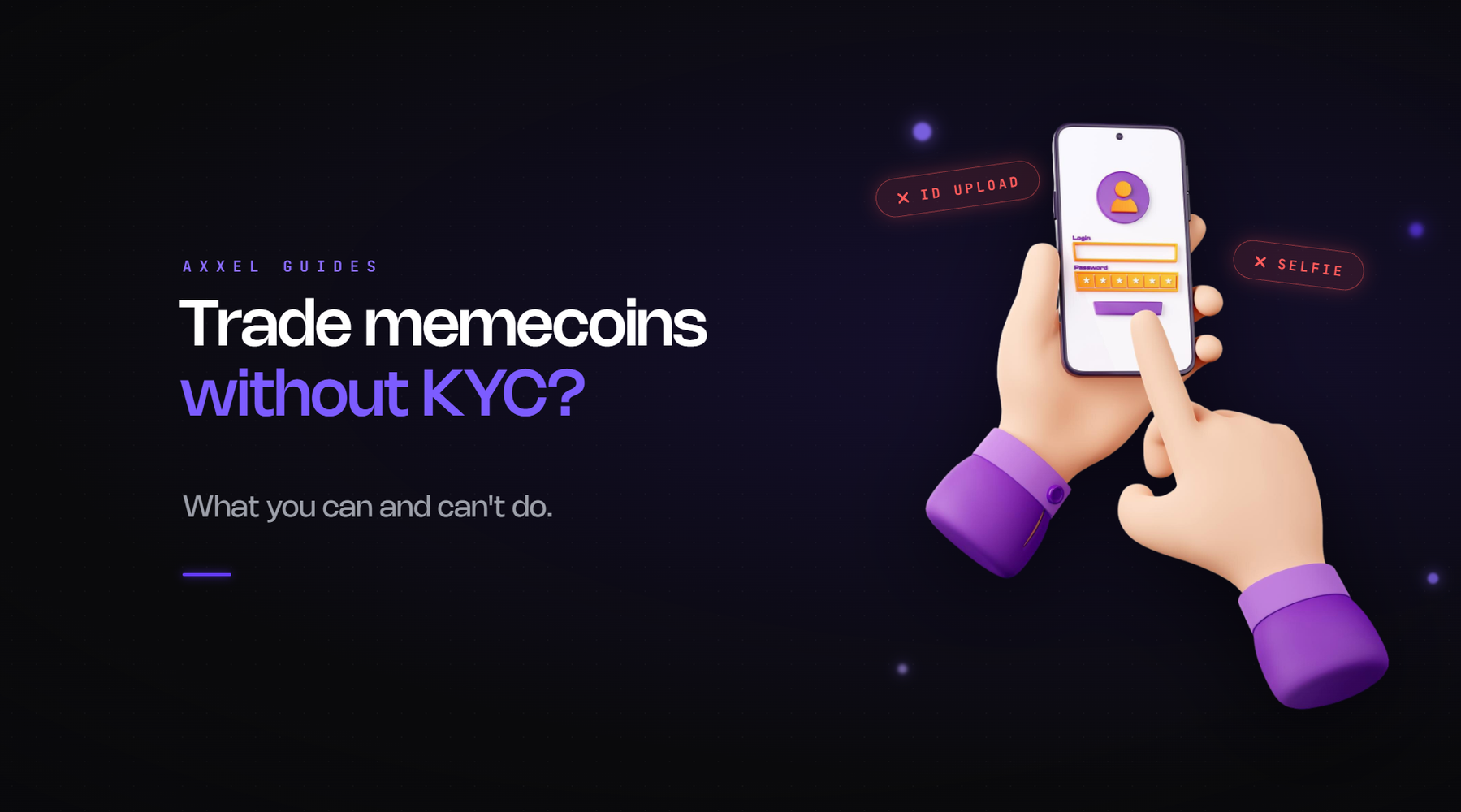
The blockchain doesn’t know your name. A wallet is a keypair, a DEX is a smart contract, and neither of them asks for a passport. So the short answer is yes: memecoin trading itself, the actual buying and selling on-chain, involves no identity check anywhere.
The longer answer is about everything around it.
Where KYC usually is
Getting money in. Most people’s crypto starts as fiat on a centralised exchange, and every regulated exchange requires identity verification to deposit from a bank. That’s the main checkpoint, and it’s before the memecoins start.
Getting money out. Same door in reverse. Converting profits to currency you can spend almost always runs through an exchange that knows who you are, and that’s also where tax reporting tends to attach.
Some fiat on-ramps inside wallets and apps. Card purchases of crypto through a wallet’s built-in ramp are run by a third party that does its own checks.
Where it usually isn’t
The wallet. Self-custody wallets don’t verify anyone. Setting one up is a download and a seed phrase.
The DEX. Trading on-chain is a transaction with a contract. No account, no verification.
Bridging between chains. On-chain bridges move assets without asking who’s moving them.
Non-custodial terminals and bots. This is the part that confuses people. A non-custodial tool never holds your funds, it just builds transactions for your wallet to sign. Because it isn’t taking custody, it isn’t operating as an exchange, and it’s generally not in the business of verifying identities. The trade happens between your wallet and the chain, with the tool as the interface.
What “no KYC” doesn’t mean
It doesn’t mean anonymous. The chain is public forever. Every trade, every wallet, every funding source is visible to anyone who looks, and the wallet you funded from an exchange that knows your name is linked to that name by the deposit. Fresh wallets exist because people know this.
It doesn’t mean untaxed. Tax liability follows the person, not the platform’s paperwork. The absence of a form doesn’t change what’s owed, and tax authorities have been getting better at chain analysis every year.
It doesn’t mean unregulated. Platforms geoblock certain countries because the rules in those countries reach them regardless of custody. If a tool isn’t available where you are, that’s the reason, and routing around it carries its own risk.
It doesn’t mean safe. The opposite, in one way. A custodial exchange can freeze a stolen deposit and occasionally does. On-chain there is no one to call. How wallets get drained is the version of that without a support desk.
The honest trade-off
The fully on-chain route gives you speed, access to every launch the second it happens, and no gatekeeper between you and the trade. It costs you the safety net, the easy fiat exit, and any illusion that your activity is private. Most people who trade memecoins seriously run both: a verified exchange for the ramp in and out, and self-custody for everything in between.
The question isn’t really “can I avoid KYC.” It’s “which parts of this do I want a counterparty for,” and the answer for most people is the two ends and not the middle.
Axxel is non-custodial across Ethereum, Base, BSC, Solana and Robinhood Chain: it never holds your funds, and trades are signed by your wallet. Market, limit, trailing and sniper orders, stop loss and take profit, MEV protection and token analysis. Flat 0.9%, no subscription.
The chain doesn’t know who you are. The exchange does, the taxman might, and the scammer doesn’t care. Plan for all three.
Crypto trading carries risk. Most memecoins lose value. Nothing here is financial, legal or tax advice. Axxel is not available in all regions.