Can You Get Your Money Back After a Rug Pull?
Almost never. Here's what's still worth doing, and the second scam that targets people who've just been rugged.

Merlin
Author
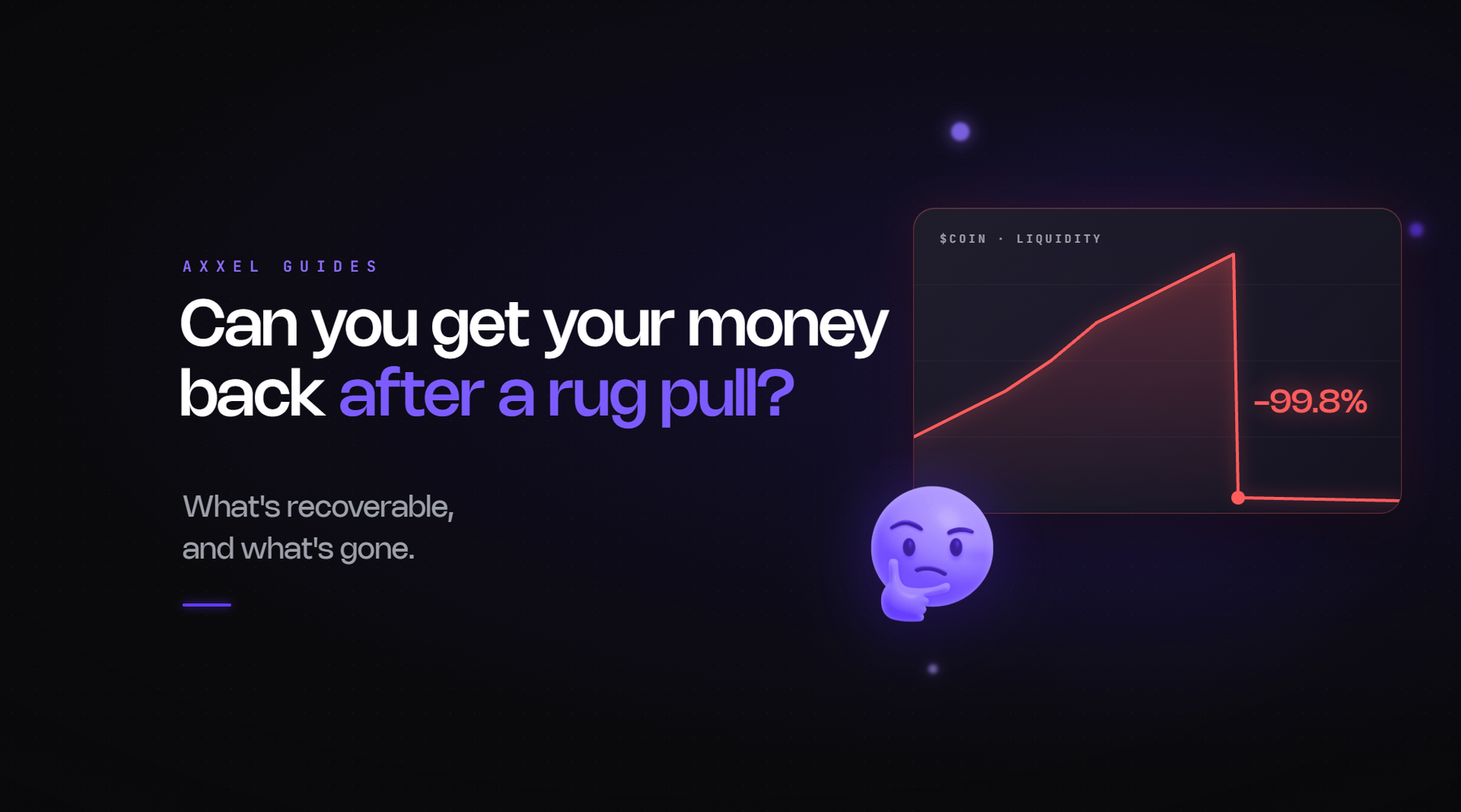
If you've just been rugged, this is the answer nobody wants to give: the money is almost certainly gone.
That's worth hearing straight rather than after paying someone to tell you otherwise, because the most expensive part of a rug is often the second scam that follows it. More on that below.
Why it's almost always gone
Blockchain transactions are final. There's no bank to call, no chargeback, no reversal. Once liquidity is pulled or supply is dumped into the pool, the proceeds sit in the deployer's wallet, and within minutes they're usually moving: bridged to another chain, split across fresh addresses, swapped through several hops, or sent somewhere designed to break the trail.
By the time most people realise what happened, the funds have been through enough steps that there's nothing left for anyone to freeze.
The rare exceptions
A few situations where something comes back, none of them common.
Funds hit a centralised exchange. Exchanges can freeze deposits and occasionally do when law enforcement asks quickly enough. It's the main route by which stolen crypto is ever recovered, and it depends on the thief being careless and the report being fast.
The team is identifiable and reachable. If the people behind it are doxxed and in a jurisdiction that acts on fraud, legal action is possible. Slow, expensive, and rare for memecoins, where anonymity is the default.
A platform compensates. Very occasionally a launchpad or protocol reimburses users after an exploit. That's for hacks of the platform itself, not for a deployer pulling their own liquidity.
For an ordinary memecoin rug by an anonymous deployer, none of these apply.
What's still worth doing
Document it. The contract address, the deployer wallet, your transaction hashes, and screenshots of anything the project promised. Do it now, while the socials still exist, because they're usually deleted within hours.
Report it. To your local police or your country's fraud reporting service. It rarely leads anywhere for a single case, but reports get aggregated, and aggregation is how serial operators eventually get caught.
Warn others. Post the deployer wallet. Serial ruggers reuse infrastructure, and a public flag on the address protects the next person running the checks.
Revoke anything you approved. If the rug involved a site you connected your wallet to, check your token approvals and revoke anything unfamiliar. A rug and a drainer are different things, but it's worth making sure it was only the first.
Record the loss. In many jurisdictions a realised loss has tax implications, so note the details for whoever handles your taxes. The general shape is in is crypto trading taxable. Not advice; check with someone qualified where you live.
The second scam
This is the part that matters most, because it's the part you can still prevent.
Post publicly that you've been rugged and within hours you'll get replies and DMs from "recovery specialists", "blockchain investigators", "ethical hackers", and occasionally people claiming to be lawyers or police. They'll say they can trace the funds and get them back.
They can't. Nobody can reverse a blockchain transaction for a fee. These are recovery scams, and they target people who've just lost money precisely because those people are desperate and already hoping something can be done.
The patterns are consistent. An upfront fee to "start the trace". A request to connect your wallet or share your seed phrase so they can "verify ownership". A fake dashboard showing your funds "located" and needing a payment to "release" them. A "compensation airdrop" from the project that just rugged you.
The rule is simple. Anyone offering to recover crypto in exchange for a payment or access to your wallet is running the second half of the scam. Real law enforcement doesn't charge you, doesn't DM you first, and never needs your seed phrase. More on how wallets actually get emptied in how crypto wallets get drained.
Next time
Not said to rub it in. Most rugs are visible in advance, and the checks take five minutes.
The rug pull checklist covers the specific signals: concentrated supply, a deployer with a history, a contract that can still be modified. The research routine puts them in order. And sizing every position as though it's going to zero is what makes the ones you miss survivable, because some always get through.
Axxel includes token analysis and configurable tax limits alongside market, limit, trailing and sniper orders, stop loss and take profit, and MEV protection across Ethereum, Base, BSC, Solana and Robinhood Chain. Flat 0.9%, non-custodial, no subscription.
The first loss is usually gone. The second one is the one you can still avoid.
Crypto trading carries risk. Most memecoins lose value. Nothing here is financial or legal advice. Axxel is not available in all regions.