How to Spot a Community Takeover That's Actually Just the Dev
CTOs are real and they're also the easiest story to fake. Here's the difference.

Merlin
Author
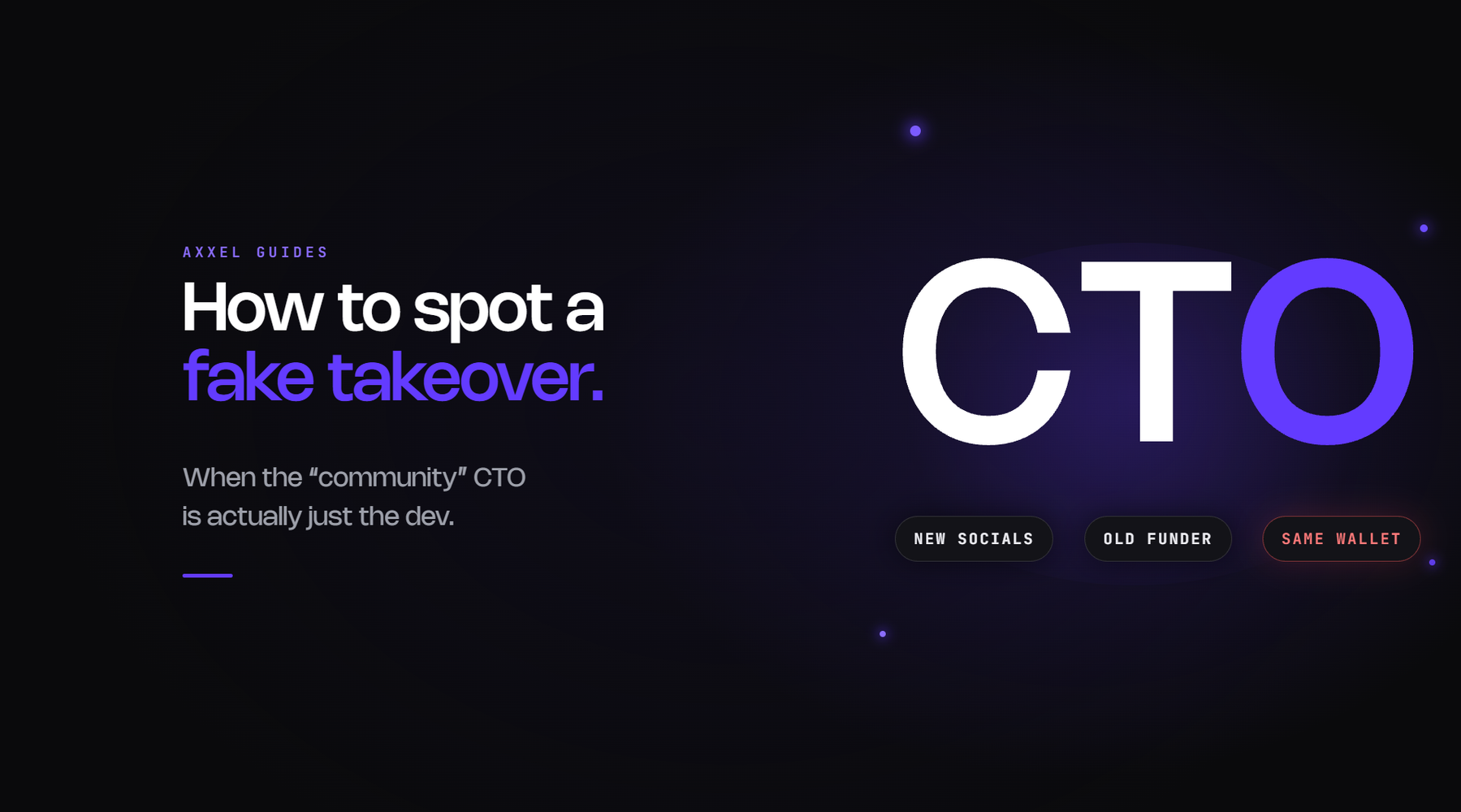
A community takeover, or CTO, is when the original team abandons a token and holders take over running it. New social accounts, new website, new people doing the work, same contract.
It's one of the more genuinely interesting things that happens in memecoins, because it's a token surviving on nothing but the people who stayed. It's also one of the easiest stories to fabricate.
Why they happen
Most memecoins are abandoned. The deployer takes their fees, stops posting, and the token drifts. Usually it dies.
Occasionally there's a community that doesn't want it to. They pick up the socials, coordinate on Telegram, produce content, and the token gets a second run. Some of the better-known tokens on any chain have been through this.
The appeal to buyers is obvious: a token with no dev to dump on you, run by people who are holders themselves. That's a genuinely better structure than most launches.
Why it's worth verifying
Because "the dev left and we took over" is also a perfect cover story for the dev.
A deployer who's dumped most of their supply and wants a second wave of buyers can announce their own departure, spin up a "community" account, and continue exactly as before with better optics and a fresh narrative. The contract doesn't change, the holders don't change, only the framing does.
From the outside, a real CTO and a fake one look identical. The difference is on-chain.
The checks
Trace the new leadership's wallets. If the people now running the token hold wallets that trace back to the original deployer's funding source, it's the same operation. This is what funding trails are for and it's the single most decisive check.
Check whether the deployer actually left. Look at the deployer wallet. Has it sold everything, or is it still holding a large share? A "community takeover" where the original dev still holds 20% isn't a takeover, it's a rebrand with the same overhang.
Look at when the new accounts were created. A community account created three days after the token launched, alongside a "the dev abandoned us" story, is a different thing from one created after six months of genuine drift.
Check the holder base didn't change. A real CTO happens among existing holders. If the top wallets all arrived in the week the takeover was announced, the "community" bought in to run it, which may be fine but isn't what's being claimed.
Look for real activity. A genuine CTO produces things: content, tooling, events, people showing up. A fake one produces announcements about the takeover.
What a real one looks like
The clearest sign is continuity of holders with discontinuity of leadership. The same wallets that held before still hold, and someone among them has taken on the work.
There's usually also a visible gap. The token went quiet, stayed quiet for a while, and then someone picked it up. Takeovers announced within days of launch are rarely what they claim.
And the people doing it are usually identifiable, at least by handle, with their own history in the space. A takeover run by anonymous accounts created that month is asking you to trust a story with nothing behind it.
What it doesn't fix
Even a genuine CTO inherits the contract. If the original deployer left a mutable tax, live freeze authority, or unrenounced ownership, the community taking over doesn't change any of that. The old keys still work.
Worth checking the contract state separately from the story, since a well-run community can be sitting on a contract that was never safe. The rug pull checklist applies to a CTO exactly as it does to a launch.
And supply concentration doesn't reset. Whatever was bundled at launch is still out there, held by whoever held it, regardless of who runs the Telegram now.
How to think about them
A verified CTO is one of the better structures in memecoins: no dev, no unlock schedule, no team allocation, and a holder base that chose to stay. That's rarer than it sounds.
An unverified one is a story, and the story is the easiest part of a token to produce.
The checks take about five minutes and they're the same ones you'd run anyway. The difference with a CTO is that the narrative is doing more work than usual, which is exactly when the on-chain version matters most.
Axxel includes token analysis across Ethereum, Base, BSC, Solana and Robinhood Chain, alongside market, limit, trailing and sniper orders, stop loss and take profit, MEV protection and configurable slippage and tax limits. Flat 0.9%, non-custodial, no subscription.
Anyone can announce a takeover. The chain tells you whether anything changed.
Crypto trading carries risk. Most memecoins lose value. Nothing here is financial advice. Axxel is not available in all regions.