What Happens When a Memecoin Gets Listed on an Exchange?
The pump, the fade, and why the announcement is usually the exit rather than the entry.

Merlin
Author
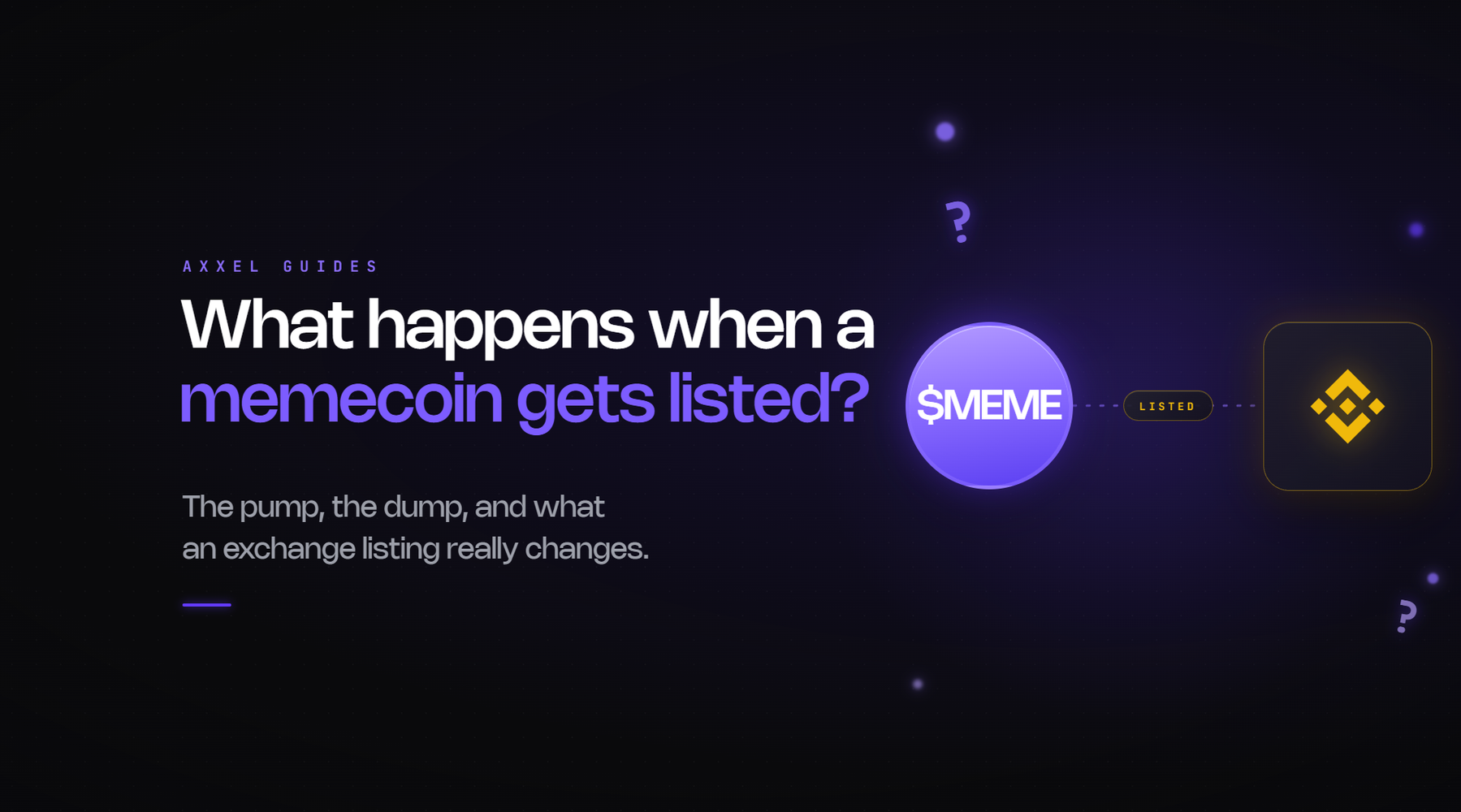
A listing announcement is the one event in memecoins that everyone recognises in advance. Which is exactly why it rarely pays the people who buy it.
The shape of it
Nearly every listing follows the same curve. A run-up in the days before, sometimes on rumour, sometimes on wallets that knew. A spike on the announcement. Then a fade, often back below where it started, over the following days.
"Buy the rumour, sell the news" is the old-market version. In memecoins the news is the only part most people see, and it's the worst part to buy.
Why it pumps
New buyers who couldn't get on-chain. Market makers positioning. People buying on-chain to deposit and sell into the exchange's order book at a premium. And legitimacy: a listing is a signal that someone with a compliance team looked at this and said yes.
Why it fades
Everyone who was holding for the listing sells into it. That's the plan they had, and the announcement is the day it executes. The exchange's users turn out to be slower and smaller than the on-chain crowd expected. And the listing was usually the last catalyst anyone could name, so once it's priced in there's nothing left to wait for.
The holders who bought early get their exit liquidity. The buyers on the announcement are it.
Tiers matter
A top-tier centralised exchange listing can genuinely change a token's regime, bringing enough new holders that the base shifts. It's rare for memecoins and it tends to happen to the ones that were already large.
A mid-tier listing is mostly a liquidity event. A brokerage app listing, which is now a thing on Robinhood Chain, brings a different kind of buyer, slower and more retail, and the on-chain crowd typically front-runs them. The Robinhood listings piece covers how that specific version has played out.
The tells that show it coming
Exchange wallets accumulating. Known deposit addresses taking in a token before any announcement. Visible on the explorer if you know the addresses.
Fresh wallets buying size in the days before. Someone who knows. What fresh wallets mean.
Listing rumours as bait. Also the most common fake catalyst in the category. "Binance listing confirmed" in a Telegram with no source is a sell signal from whoever posted it.
How to play it
If you're holding. The announcement spike is your liquidity. Scale out into it. This is the single clearest "sell the strength" moment memecoins offer, and when to sell covers how to split it.
If you're not. Don't chase the announcement. Let the fade happen, then reassess the token on its own merits a week later, at which point you'll know whether the new holders stayed. Usually they didn't. Why do I always buy the top is this exact mechanism.
If it's a top-tier listing on a token that was already big. Possibly different. Watch holders and volume for a few days before deciding it's a new regime rather than a bigger spike.
The scam version
Fake listing announcements, impersonated exchange accounts, and "listing fee" requests to project teams. If a listing isn't on the exchange's own channels, it hasn't happened. If someone's asking you for money to make it happen, it never will.
Axxel includes token analysis alongside market, limit, trailing and sniper orders, stop loss and take profit, MEV protection and configurable slippage across Ethereum, Base, BSC, Solana and Robinhood Chain. Flat 0.9%, non-custodial, no subscription.
The listing is when the early holders get paid. Decide which side of that you're on before the announcement, not after.
Crypto trading carries risk. Most memecoins lose value. Nothing here is financial advice. Axxel is not available in all regions.