Is Memecoin Trading Just Gambling? An Honest Answer
Mostly yes. Here's the part that isn't, and what separates the two.

Merlin
Author
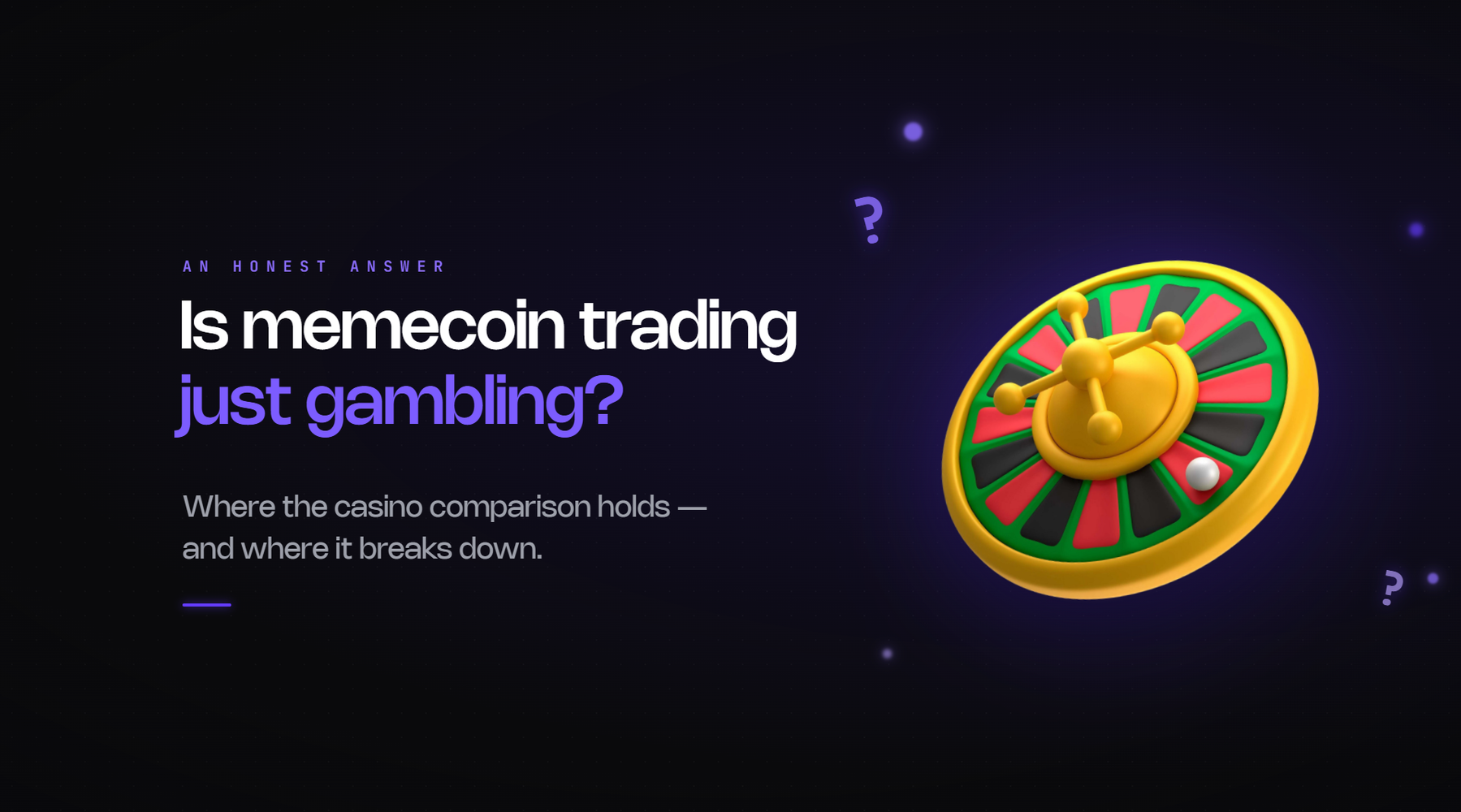
Most memecoin trading is gambling. Worth saying plainly, because the industry's built on not saying it.
The interesting question isn't whether it's gambling. It's what separates the small share of it that isn't, because that's the part you can actually do something about.
What gambling is
Three features, roughly. The expected outcome is negative. There's no edge available to you, meaning no information or skill that improves your odds. And the outcome is independent of anything you do once you've placed the bet.
Roulette is all three. Poker isn't, because skill affects outcomes over enough hands, even though any single hand is luck.
Where memecoins match that
The base rate is brutal. The overwhelming majority go to zero, most within days, and no amount of analysis changes that distribution.
There are no fundamentals. No revenue, no product, nothing to value. The price is a function of attention, and attention is unpredictable.
And the flow of money is structurally against you. Every launch has a deployer, snipers and bundlers who bought before you at a fraction of the price. On most tokens, you're the exit liquidity. That's not cynicism, it's how the mechanism works.
So yes. Someone who buys what's trending, with whatever amount felt right, holds until it goes to zero or they panic, and then does it again, is gambling. That describes most participants.
Where it differs
Three things poker has that roulette doesn't, and memecoins have all three.
Information is public. Every wallet, every transaction, every holder distribution is on-chain. Reading that gives you an edge over people who don't, and most people don't. The research routine takes five minutes and filters out a large share of what goes wrong.
You control the size. A gambler bets what feels right. A trader sizes so that being wrong is survivable, because they expect to be wrong most of the time. Same coin, completely different risk.
You control the exit. The outcome isn't independent of what you do after you're in. Deciding your exit before you enter and setting it as an order changes the distribution of your results more than any entry ever will. Most people who lose money on memecoins didn't get rugged. They were up and didn't leave.
The distinction is the process, not the asset
Two people can buy the same token at the same price. One has done the five-minute check, sized at 2% of a bankroll they've written off, and set a take profit and a stop. The other saw it on trending and put in what was in the wallet.
Same asset. One is trading. One is gambling. The coin doesn't know the difference, but the results over a hundred trades do.
The honest limit
Process doesn't make you a winner. It makes you a slower loser with a real chance of catching something, which is genuinely better and also not what the space sells.
Even with every discipline in place, memecoins are high variance, most positions lose, and a good year can be undone by one oversized mistake. The difference between the trader and the gambler isn't that one wins and one loses. It's that one is still here in six months to catch the thing that works, and one isn't.
What the tools should be doing
This is the part that bothers us about the category. Most trading terminals are optimised for the gambler. Fast buys, bright charts, trending lists, nothing that slows you down or asks whether you've thought about the exit.
If most people trading memecoins lose money, a tool that helps you win would look different. It would make sizing visible. It would make setting an exit at entry the default rather than an option. It would surface the checks that catch rugs before you click. It would tell you when you're tilting.
That's what we're building toward. Axxel already supports limit, trailing and sniper orders, stop loss and take profit, token analysis and configurable tax limits across Ethereum, Base, BSC, Solana and Robinhood Chain. Flat 0.9%, non-custodial, no subscription. The AI layer coming to the web terminal is about making the process the path of least resistance rather than the thing you have to remember.
Memecoins will always be a bad bet for most people. The question is whether the tool you're using makes that more or less likely.
Crypto trading carries risk. Most memecoins lose value. Nothing here is financial advice. Axxel is not available in all regions.