Why Do I Keep Losing Money on Memecoins?
: It's almost never bad luck. It's one of five things, and your last twenty trades will tell you which.

Merlin
Author
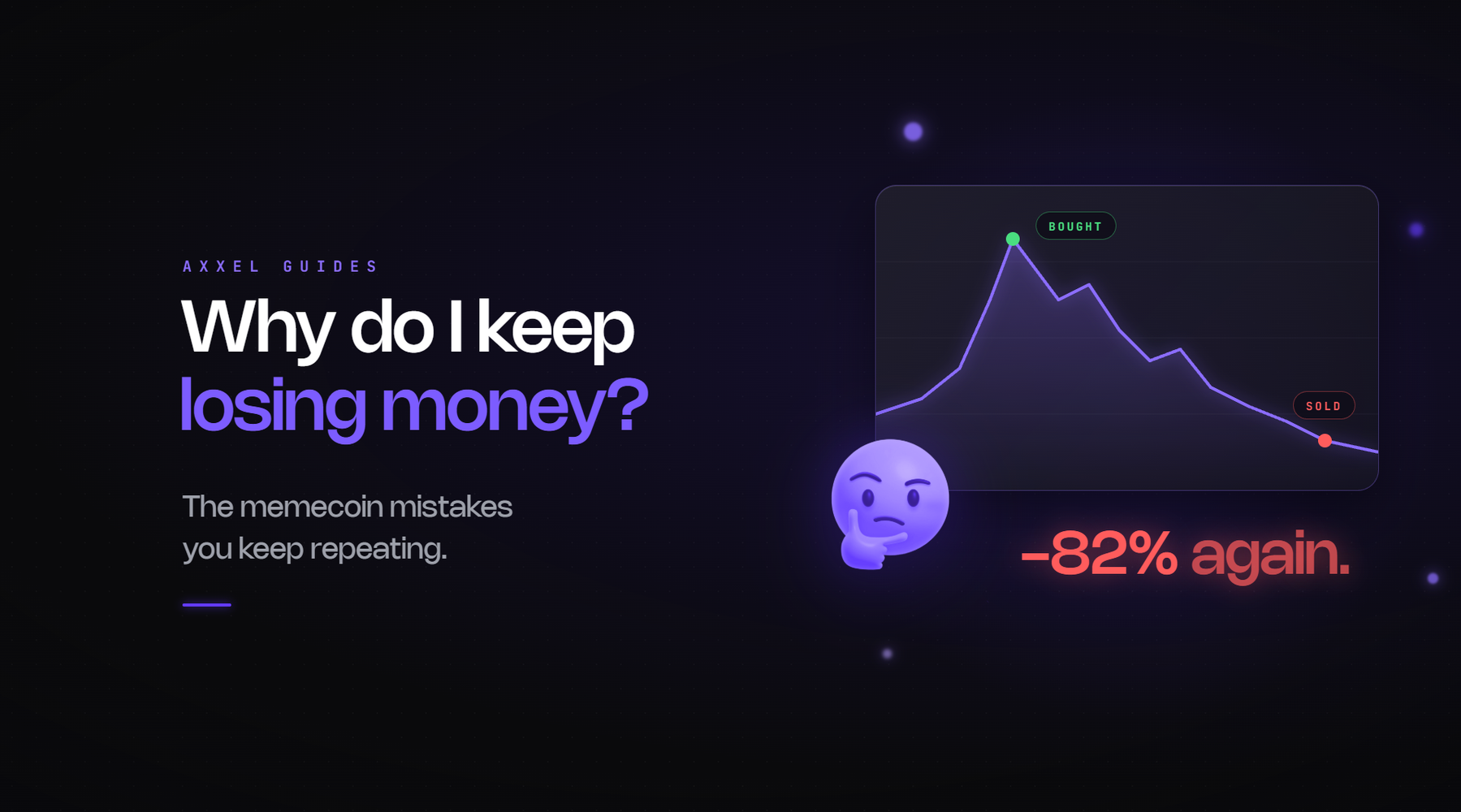
If you're losing money on memecoins consistently, not just sometimes, the market isn't the explanation. Most memecoins go to zero and everyone trading them knows it, so the base rate alone doesn't separate the people who are down from the people who aren't.
What separates them is usually one habit. Not five, one. Here's how to find yours.
Pull your last twenty trades
Before reading further, get the actual list. Entry, exit, size, outcome. Most people have never looked at their own history as a set, and the pattern is usually obvious once it's on one screen.
Then check it against these five.
1. Your losers are bigger than your winners
Look at position sizes. If the trades that went to zero were larger than the ones that worked, you're sizing on conviction, and conviction has no relationship to outcomes here.
This is the most common cause and the most expensive. Twenty small wins get erased by one oversized loss, and the recovery maths is brutal: down 50% needs 100% back. The fix is mechanical rather than psychological, and it's in position sizing. Size every position as though it's going to zero.
2. Your winners became losers
Look at peak versus exit. If several trades were up meaningfully and you sold them flat or down, the problem isn't picking. It's leaving.
Nobody gets rugged out of a 10x. They watch it come back. The fix is deciding the exit before you enter and setting it as an order so it executes without you, which is the only version of discipline that survives contact with a green chart.
3. You bought after the move
Look at where your entries sit on each chart. If they're consistently near local tops, you're buying things because they're moving, which means you're arriving after the people who moved them.
Chasing feels like participation and it's structurally the worst entry available. The fix is uncomfortable: stop buying anything that's already run, and accept missing things. The psychology piece covers why this is hard and what actually works.
4. You bought things that were never going to work
Look at what the losers actually were. Rugs, honeypots, copycat contracts, tokens with 60% held by three wallets. If a meaningful share of your losses are structural rather than market, you're not doing the checks.
Five minutes per token catches most of it. The research routine is the sequence, and skipping it is the difference between losing to the market and losing to a contract.
5. Fees are eating you
Look at trade sizes against costs. If you're trading $20 positions on a chain where a round trip costs $8, you need a 40% move to break even. On Ethereum mainnet that number's worse.
This one's invisible because fees don't feel like losses. The full accounting is in trading bot fees explained, and the fix is either larger positions or a cheaper chain.
How to tell which one is yours
Usually one of the five dominates. If most of your red is one or two big positions, it's sizing. If most of it is trades that were green at some point, it's exits. If your entries cluster at tops, it's chasing. If the losers were scams, it's research. If your positions are tiny and costs are large, it's fees.
Fix the dominant one first. People who try to fix everything at once fix nothing, because they're changing five variables and can't tell what worked.
The honest bit
Fixing your habit doesn't make you profitable. It makes you lose slower and gives you a real chance of being there when something works. Memecoins are close to gambling for most people, and the difference is entirely in the process.
But "I keep losing" almost always has a specific cause, and the cause is almost always visible in your own history. Which means it's fixable, which is more than most people believe when they type the question.
Axxel supports limit, trailing and sniper orders, stop loss and take profit, token analysis and configurable tax limits across Ethereum, Base, BSC, Solana and Robinhood Chain, so exits and checks happen automatically rather than depending on you remembering. Flat 0.9%, non-custodial, no subscription.
Pull the twenty trades. The answer's in there.
Crypto trading carries risk. Most memecoins lose value. Nothing here is financial advice. Axxel is not available in all regions.